
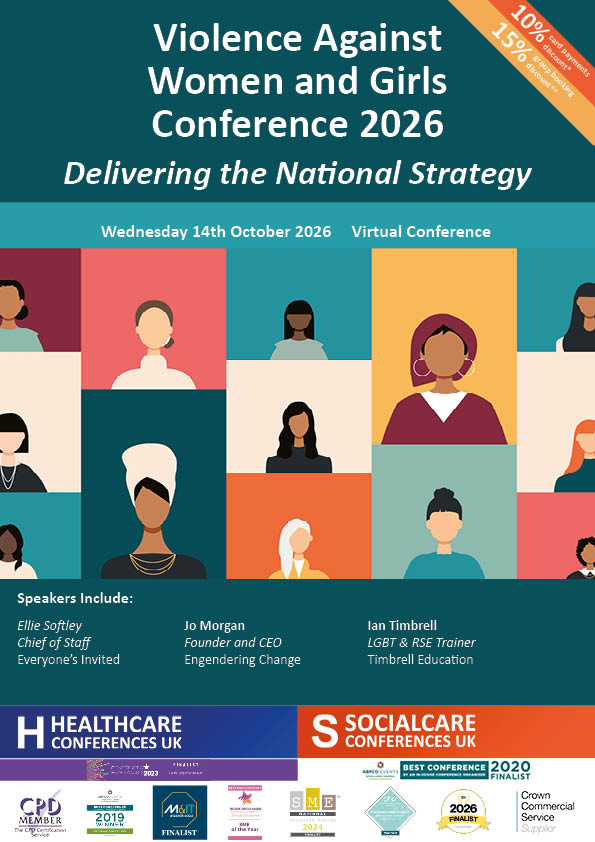
The Government’s new Violence Against Women and Girls strategy marks a clear shift: violence against women and girls is being treated as a national emergency requiring urgent, whole-system action. For those working with children and young people, this signals an immediate responsibility to strengthen prevention, safeguarding, and early intervention. The Violence Against Women and Girls Conference 2026 brings together those working with women and girls to examine what this strategy means in practice and how early action can help stop harm before it escalates.
Through expert-led sessions, practical discussion, and shared learning, the conference will focus on the real-world challenges practitioners are facing now. Delegates will explore the need for cultural change to be able to recognise and respond to abuse; challenging harmful behaviours and implementing trauma-informed approaches to support victims and survivors.
“Ending violence against women and girls is the work of us all … It will take all of society to step up and end the epidemic of abuse and violence that shames our country.”
Jess Phillips, Safeguarding Minister
“VAWG isn’t just a criminal justice issue, it’s a public health emergency. When we strengthen healthcare systems to identify abuse early, support survivors, challenge perpetrators and address the trauma that fuels cycles of harm, we make communities safer. Ensuring health is not an add-on to prevention; it is a core part of the solution”
Jess Asato MP, Freedom from Violence and Abuse: a cross-government strategy to build a safer society for women and girls Volume 1, Dec 2025
Designed for safeguarding leads, health and social care professionals, teachers, youth workers and others working with children, the conference offers a timely opportunity to align practice with national priorities and play a direct role in preventing violence against women and girls.
By the end of the conference, you will be able to:
Understand the key aims of the new Government Violence Against Women and Girls strategy and the implications for working with children and young people
Recognise how violence against women and girls manifests both online and offline
Identify early indicators of harm, vulnerability, and risk linked to misogyny, unhealthy relationships, and adverse childhood experiences
Apply practical approaches to teaching healthy relationships, consent, and respect in age-appropriate and inclusive ways
Confidently challenge harmful behaviours and attitudes linked to power, control, and gender, using constructive and safeguarding-led responses