
Follow the conference on social media #SelfNeglect
Self-neglect can be a complex and challenging issue for practitioners because of the need to find the balance between respecting a person’s autonomy and fulfilling a duty to protect the adult’s health and well-being.
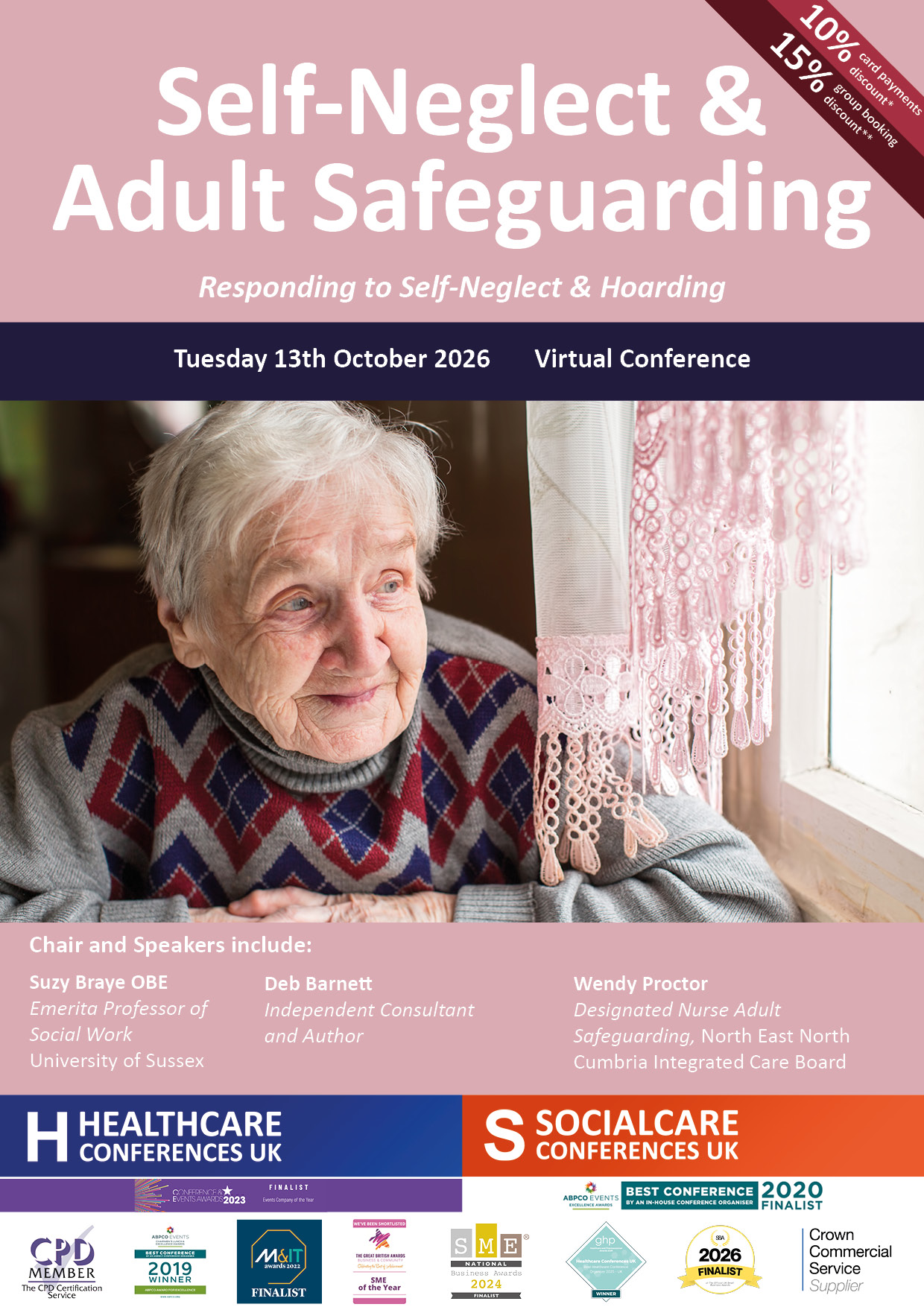
This conference which features extended interactive sessions focuses on the difficult issue of self neglect and adult safeguarding and includes an extended focus on hoarding. Through national updates, practical case studies and extended interactive group work the conference will cover self-neglect, meeting the statutory safeguarding guidance, safeguarding people who self-neglect: the evidence and what works, developing guidance for professionals when dealing with self-neglect and resistance to engage with services, an extended session on hoarding, and an extended session on dealing with the underlying causes of self-neglect working in partnership with people who are self-neglecting in a multidisciplinary way. The conference will focus on the increasing issue of loneliness and social isolation in older people which evidence shows can contribute to self neglect and reflect on learning from recent thematic reviews into self neglect and hoarding.
“The most common type of risk in section 42 enquiries that concluded in the year was neglect and acts of omission, which accounted for 40.8% of risks. The most common location of the risk was the person’s own home at 51.9%.””
Safeguarding adults, England, 2024 to 2025: statistical commentary, UK Government 17 December 2025
“Self-neglect presents in hugely diverse ways, and this in itself represents a challenge in practice”
The Somerset Safeguarding Adults Board July 2025
“Self-neglect is used to describe a wide range of behaviours which relate to neglect to care for one’s own personal hygiene, health or surroundings. The person themselves may not recognise the impact of their behaviour or may not use the same terminology to describe their own situation. Ultimately, self-neglect becomes a cause for concern where there are serious risks identified to an individual’s health, wellbeing or lifestyle. Self-neglect may take the form of a neglect of nutrition or hydration, or behaviours such as hoarding... Practitioners should review each experience on a case by case basis and remain curious to whether incidents are one-off or multiple, affects the people around an individual, and whether there are any patterns of harm that may be an indication of other types of abuse or poor mental health. Some of these patterns of harm may also indicate a case of organisational abuse if instances of poor care are recurring or seem to affect multiple people in an organisation. It is important to share information with system partners if this is suspected, particularly in the CCG or ICS in future and the CQC where this is relevant.”
Revisiting Safeguarding Practice Guidance Department of Health and Social Care
The conference will provide an opportunity to:
Reflect on the challenges of effectively managing self neglect
Understand the latest evidence about what works in managing self-neglect
Learn and reflect on serious case reviews involving self-neglect
Managing risk and support a strengths based way of working to work together to identify meaningful solutions
Reflect on what we can do to reduce loneliness and social isolation which will in turn reduce self neglect
Understand hoarding behaviour and the psychological / mental health issues associated with Hoarding
Learn from a recent thematic review into Self Neglect
Share experiences & learning with other colleagues around working on difficult self-neglect cases through interactive facilitated group work
Self assess and improve your local guidance for professionals when dealing with self-neglect and resistance to engage with services
Reflect on professional decision making with regard to capacity and unwise decisions vs unacceptable risk?
Explore responses to hoarding and how this fits within the self-neglect safeguarding response
Understand issues of mental capacity, choice and autonomy when responding to self-neglect concerns and resistance to service engagement
Supports CPD professional development and acts as revalidation evidence. This course provides 5 Hrs training for CPD subject to peer group approval for revalidation purposes