
Follow the conference on social media #LearningFromDeaths
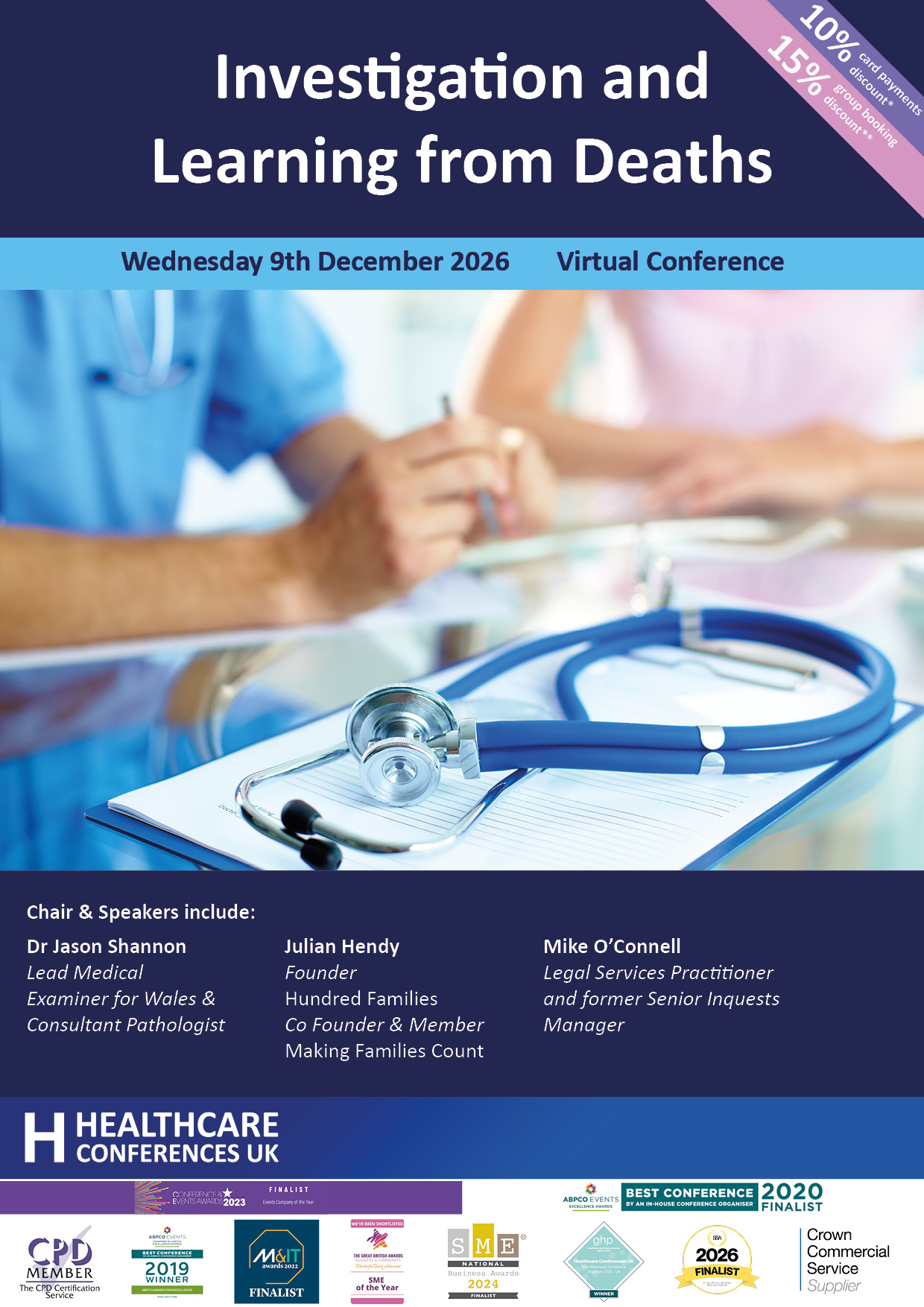
This National Conference focuses on improving the investigation and learning from deaths. There will be an extended focus on engaging and involving patients, families and staff following a death, and on learning from deaths including an update from a coroner. Extended sessions will focus on mortality governance, investigation and monitoring, national developments and case studies of NHS Trusts learning from deaths and identifying and implementing learning actions for change.
The conference opens with an extended session from Dr Jason Shannon, Lead Medical Examiner for Wales and Consultant Pathologist, exploring learning from deaths, the statutory Medical Examiner system, the Medical Certificate of Cause of Death, death certification reform, and the extension of medical examiner scrutiny to all non-coronial deaths wherever they occur.
“Of the avoidable deaths in England and Wales, around 65% could be attributed to conditions considered preventable (around 82,000 deaths). While many of the underpinning drivers of ill health are beyond the scope of the NHS, there remains considerable opportunity to ensure more consistent delivery of high-quality care.”
Based on 2022 data, Independent Review of patient safety across the health and care landscape Published 7 July 2025
“Medical examiners scrutinise the cause of death provided by the medical practitioner completing the MCCD. The statutory system of medical examiners was introduced on 9 September 2024, in response to the findings of numerous independent inquiries, including the Shipman Inquiry. All deaths not investigated by the coroner must receive appropriate scrutiny by a medical examiner. In addition to scrutinising the cause of death, medical examiners will offer a conversation about the cause of death with the deceased’s representative, which provides an opportunity for them to raise concerns. This conversation can be carried out by the medical examiner officer. This is an important step in helping the bereaved to understand the cause of death and the sequence of conditions that led to it. For the attending practitioner, engaging the medical examiner as soon as possible to discuss their thinking on the cause of death can positively impact these subsequent conversations with the representative of the deceased and limit any potential delays to the death’s eventual registration.””
Guidance for medical practitioners completing medical certificates of cause of death in England and Wales, Published 9 September 2024
The conference will support you to work with and involve families when a death occurs
“Involvement is not a ‘nice extra’. It’s vital to safe care and should be built into learning and investigation processes from the outset.”
HSSIB, Sharing HSSIB learning on mental health and patient safety, May 2026
The conference will update delegates on the National Patient Safety Incident Response Framework (PSIRF) and the implications for patient safety incident investigation and learning from deaths. The conference will also discuss the Terminally Ill Adults (End of Life) Bill in terms of assisted dying and the implications for investigation of deaths.
Attendance at this conference will support you to:
Network with colleagues who are working to improve practice in the investigation and learning from deaths
Improve practice in learning from deaths
Understand the implications of the death certification reforms legislation
Reflect on the involvement of families through a lived experience of a carer
Learn from working examples of mortality governance and develop the role of mortality audits, internal inspection and mortality reviews to answer the question “did a problem in care contribute to the death?
Understand the implications of the Patient Safety Incident Response Framework (PSIRF)
Discuss the implications of the Terminally Ill Adults (End of Life) Bill in terms of assisted dying and the implications for investigation of deaths
Examining clinical governance concerns following deaths using a case study focusing on delays to care and treatment
Understand national developments and national reporting requirements
Learn from best practice in the investigation of deaths
Identification and reporting of deaths and the role of the Medical Examiner
Reflect on the Coroner perspective and role
Understand the decision to investigate, and the appropriate level of investigation
Explore how a human factors can support learning from deaths
Effectively support staff when a death occurs including supporting staff through coroner inquests and serious incident investigations
Self assess your learning from deaths process and ensure investigations lead to change
Supports CPD professional development and acts as revalidation evidence. This course provides 5 Hrs training for CPD subject to peer group approval for revalidation purposes