
Follow the conference on social media #SelfHarm
“There is no greater threat to the health of children and young adults than the silent mental health pandemic … leading to tragic cases of self-harm and suicide… Mental illness is keeping people away from school, from work and leading to tragic cases of self-harm and suicide.”
The Royal College of Psychiatrists February 2026
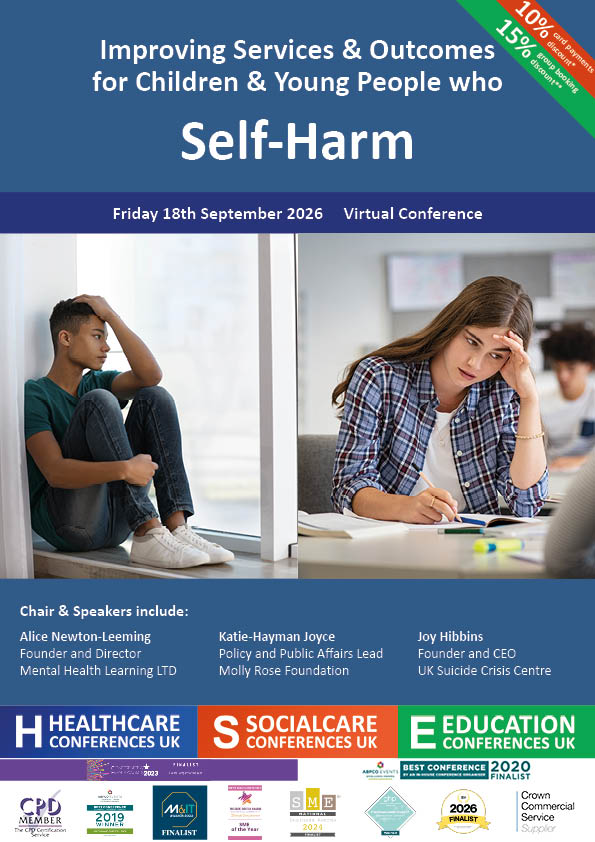
Through case studies and expert advice this conference will explore how we can support people who self-harm by ensuring a compassionate approach, understanding the common causes and drivers, as well as developing safety plans with a path to recovery.
“Most people who self-harmed did so to relieve unpleasant feelings. 83.1% of those who had self-harmed reported doing so to relieve unpleasant feelings of anger, tension, anxiety or depression. Among people who had self-harmed, cutting was the most reported method.”
NHS England November 2025
This conference focuses on improving services and outcomes for children and young people who self-harm. The event will look at the latest national developments in self-harm interventions including current initiatives to reduce the gap in service provisions. We will also learn from findings from a report into the influence of social media platforms on self-harm and the impact of the Online Safety Act:
“Suicide and self-harm among young people are also still on the rise. And while national datasets won’t pick this up, it’s vital to keep in mind that suicide has an immeasurably devastating and widespread effect on the people who have lost someone.”
Ella Fuller, Senior Policy Advisor (Mental Health), NHS Providers, September 2024
This conference will also focus on providing training that is appropriate to the responsibilities of staff members who work with people who self-harm, as well as understanding the stigma associated with it and engaging compassionately with patients. We will also be looking at early intervention and the use of safety planning and person centered psychosocial assessment to mitigate the risk of suicide.
This conference will enable you to:
Network with colleagues who are working to improve services and outcomes for children and young people who self-harm
Reflect on the Lived Experience of a person who has self-harmed
Learn from outstanding practice in the management of self-harm
Recognize the benefits of a multi-agency approach to supporting children and young people at risk of self-harm
Improve practice in your service: culture, staff attitudes and quality assurance of self harm support
Examine what an effective self-harm pathway should look like?
Reflect on findings from research into the influence of social media platforms on self-harm.
Learn from national initiatives into quality improvement in self-harm care provisions
Ensure early identification and intervention in schools
Develop your skills in ensuring a compassionate approach to self-harm
Understand how you can improve the response to self-harm in the emergency department
Identify key strategies for involving and engaging families of children and young people who self-harm
Ensure you are up to date with the latest evidence
Develop strategies and effective interventions to support people to be safe after self-harm
Reflect on the essential elements of supporting boys who self harm
Self assess and reflect on your own practice
Supports CPD professional development and acts as revalidation evidence. This course provides 5 Hrs training for CPD subject to peer group approval for revalidation purposes