
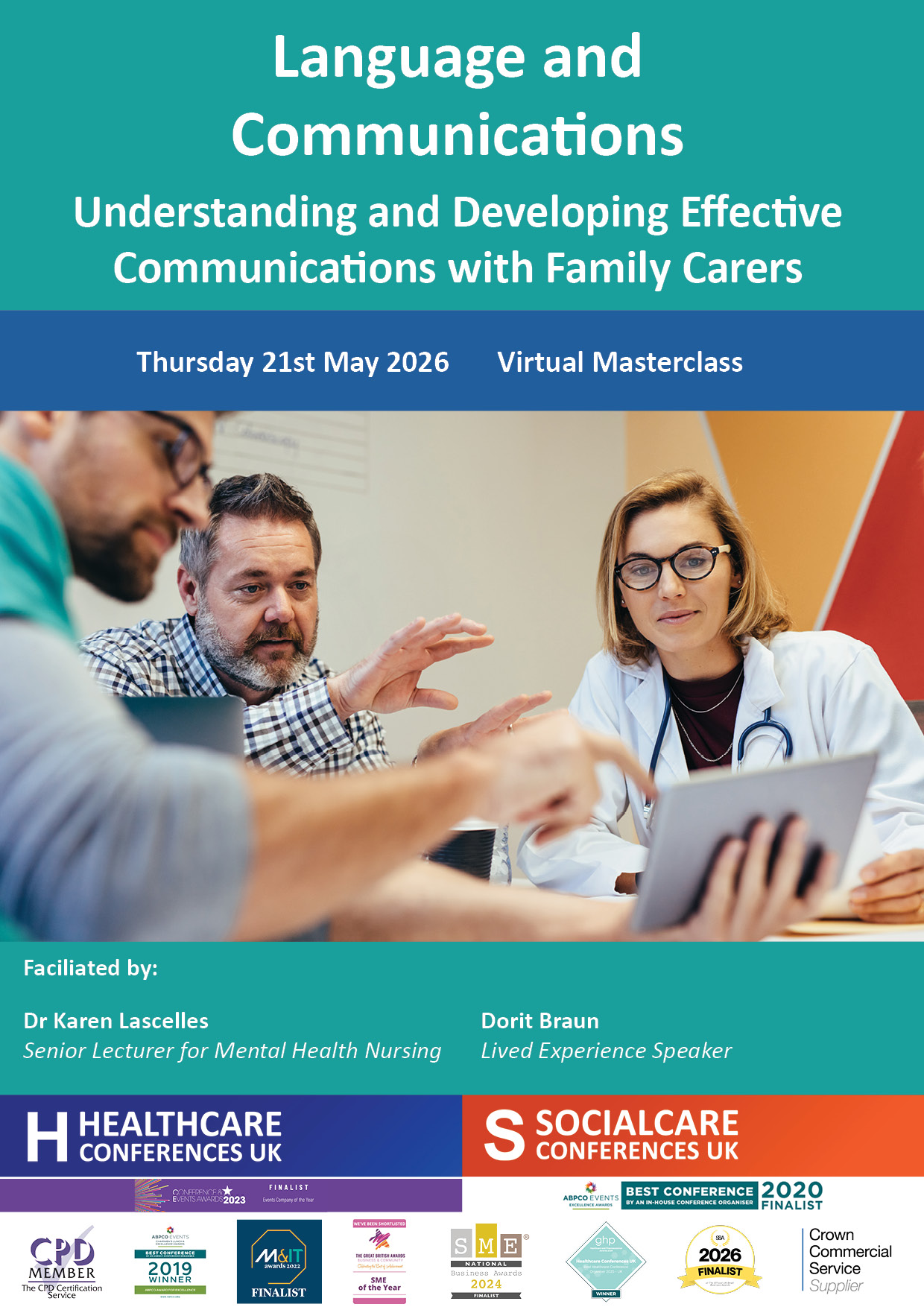
Good and clear communication between clinicians, patients/service users and family carers are vital for establishing and maintaining effective working relationships that can keep people who are experiencing mental health crises safe. This interactive half day course uses audio and video case studies and scenarios to explore common barriers to effective communications and what can be done about them.
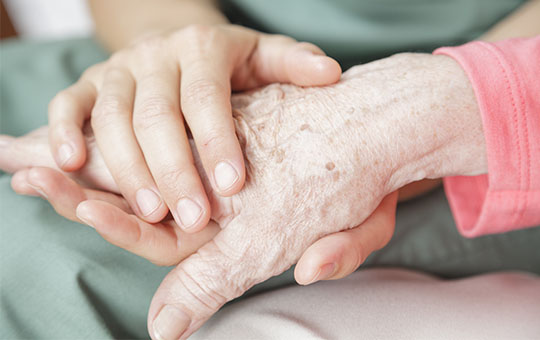
We use the term family carers to mean anyone who is significant to the patient, including biological and non biological family and friends who may or may not live in the same household or even the same country.
WHO SHOULD ATTEND
This course is suitable for anyone working in Health and Social Care whose work brings them into direct contact with someone experiencing a mental health crisis. This includes but is not limited to psychiatrists, nurses, ED service leads, social workers, occupational therapists and peer support workers.
KEY LEARNING OBJECTIVES
Participants will
Consider how the language used by professionals can affect family carers’ feelings and attitudes toward services
Consider how misunderstandings and different meanings attached to words such as crisis, emergency, or urgent by the public and by clinicians can have devastating consequences
Learn about the impact of uncertainty, changing family dynamics and fear on family carers
Reflect on how communications with family carers can go wrong and what this means for patients/service users
Learn about the differences between working face to face and working on the telephone
Explore improving practice in telephone based work
Consider good practice ideas