

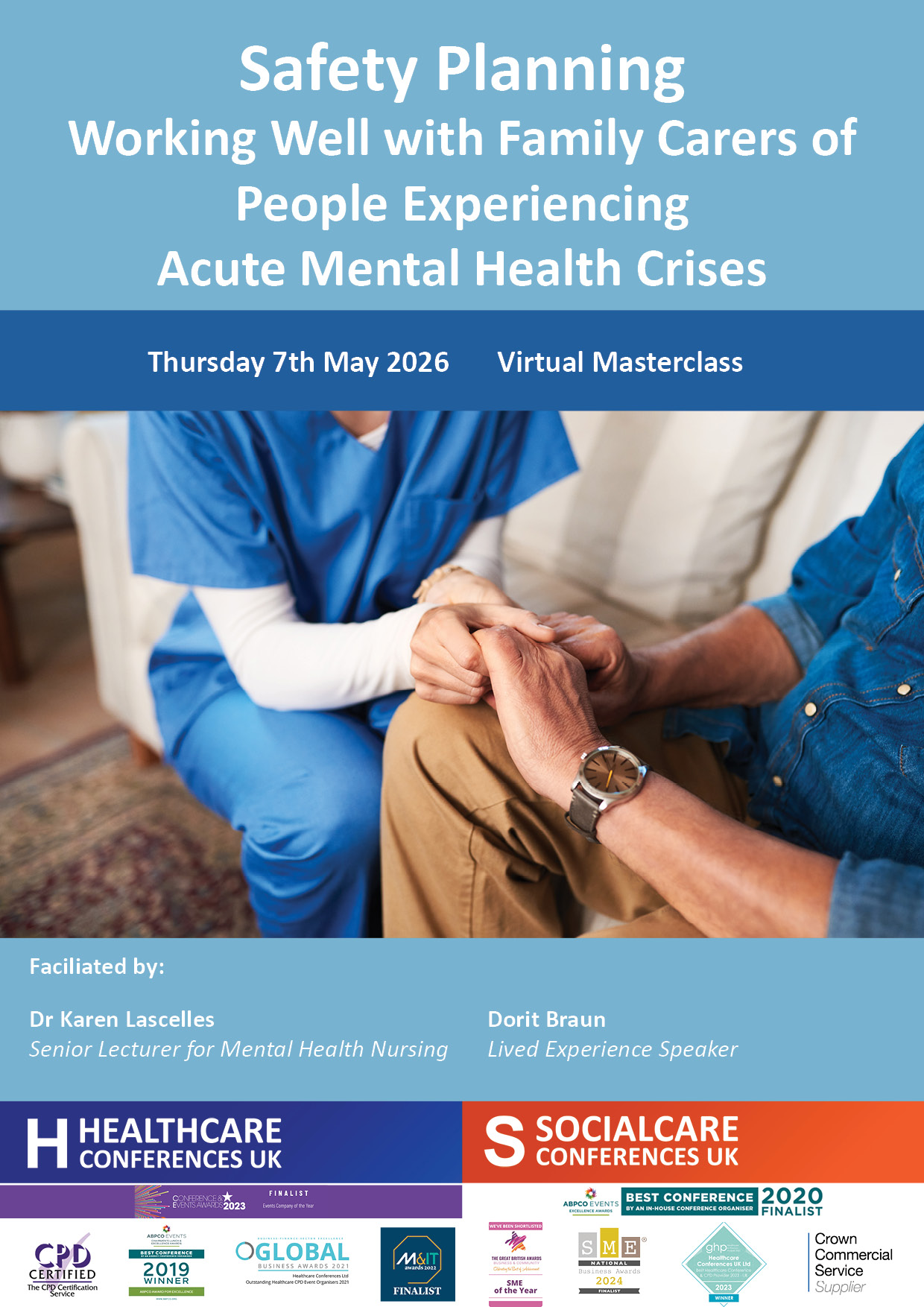
The new NHS England guidance Staying Safe from Suicide; confirms that risk cannot and should not be measured using risk scales, and that any such scales are dangerously misleading. A more helpful and hopeful perspective is to think about the safety of people who might at times feel suicidal. This includes engaging in collaborative safety planning with patients and their family carers. This interactive half day course uses video and audio case studies to examine why safety planning is so important, and explores practical ideas about how meaningful and feasible safety planning can be carried out with family carers.
We use the term family carers to mean anyone who is significant to the patient, including biological and non biological family and friends who may or may not live in the same household or even the same country.
There is a great deal of guidance that expects clinicians to involve the families of people during and following an acute mental health crisis. And yet, Coroner’s Prevention of Future Deaths reports, and investigations following homicides when the perpetrator had a diagnosed mental illness, regularly point to the lack of meaningful engagement of the family, the failure to listen to their views, experiences and needs, or to offer them support and information to keep their family member safe. Martha’s rule, which is to be extended to mental health services, also requires good working relationships with families.
Making Families Count Life Beyond the Cubicle project was funded by NHS England (HEE South East Region legacy funds). The project’s resources were co-created with patients, family carers and clinicians, tested in eleven NHS Trusts, and independently evaluated. The resources have been shown to encourage clinicians to work well with family in order to improve care, avoid harm and reduce deaths. The project worked with clinicians, service users/patients and family carers to identify areas for improvement, barriers to improvement and ways to address these barriers. All too often, patients are discharged from hospital inpatient stays, or from an ED with safety/care plans that have not included or been adequately discussed with family carers. Family members often feel their concerns have not been taken into account, and have reported that their role in keeping their family member safe is not always clear, understood or even practical.
This course is suitable for anyone working in Health and Social Care whose work brings them into direct contact with someone experiencing a mental health crisis. This includes but is not limited to psychiatrists, nurses, ED service leads, social workers, occupational therapists and peer support workers.
KEY LEARNING OBJECTIVES
Participants will
Learn what safety planning means in current policy and guidance
Consider the perspectives of family carers about their role in keeping someone at risk safe
Explore how the needs and feelings of family carers impact on their caring abilities and on their lives
Examine the balance of rights and responsibilities between family carers, patients/service users and clinicians
Explore how best to obtain and share information in situations where people may be fearful of speaking and fearful of their family member
Reflect on clinicians’ feelings and experiences of working with patients in crisis and how these can influence practice
Consider how language informs expectations by families, patients/service users and clinicians and what can be done about that