
Follow the conference on social media #NHSSepsis
“Sepsis is a silent killer affecting 245,000 people in the UK each year, and taking 48,000 lives – that’s 5 deaths every hour.”
UK Sepsis Trust
“The recognition of sepsis remains an urgent and persistent safety risk.”
NICE, November 2025
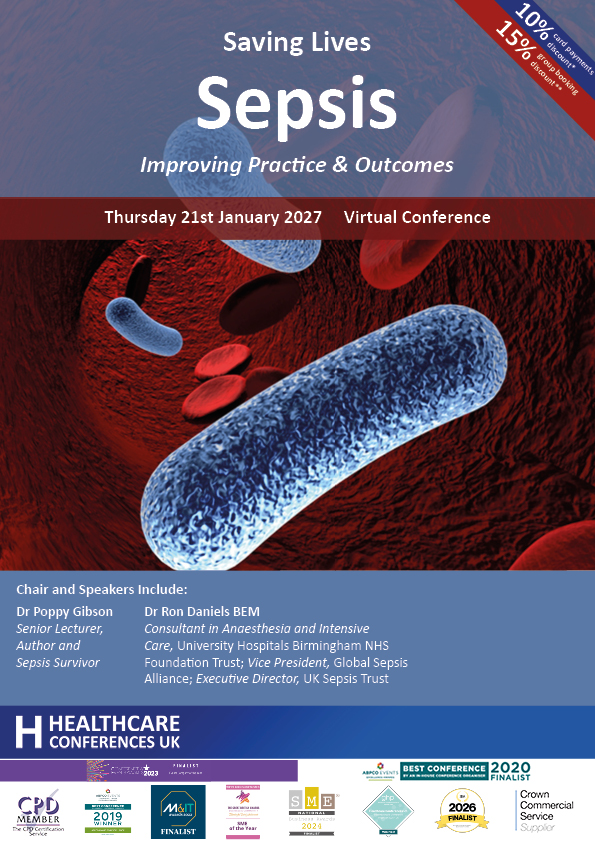
This important national conference focuses on improving practice and outcomes in sepsis through early recognition, effective escalation, timely treatment, reliable response to deterioration and improved support after sepsis. The event will examine the practical implications of the forthcoming Sepsis Modern Service Framework.
Sepsis continues to affect thousands of people every year and remains a major cause of avoidable harm, mortality, clinical negligence claims and long-term physical and psychological impact. Despite national awareness campaigns and clinical guidance, HSSIB has warned that the recognition of sepsis remains an “urgent and persistent safety risk”, with investigations continuing to highlight delays in diagnosis, missed deterioration, gaps in escalation, and patients and families not always being listened to when raising concerns.
“Martha’s Rule is a patient safety initiative to support the early detection of deterioration by ensuring the concerns of patients, families, carers and staff are listened to and acted upon.”
NHS England
The conference will provide a timely update on the implementation of the updated NICE guideline NG253: Suspected sepsis in people aged 16 or over, published in November 2025. The guideline covers recognition, diagnosis and early management, including early assessment, initial treatment, escalation, source control, monitoring, information and support, and training and education. NICE has highlighted that the updated guidance supports faster, more tailored treatment for adults with suspected sepsis, including more carefully calibrated fluid treatment and enhanced support for people with communication difficulties.
The day will examine the latest position on the Sepsis Modern Service Framework which is due to be published in 2026, what it means for services, including prevention, identification, escalation and treatment of sepsis and severe infection, reducing unwarranted variation, strengthening evidence-based pathways and improving outcomes.
Through national updates, expert sessions and practical case studies, delegates will be supported to improve sepsis leadership, strengthen adherence to NICE NG253, develop reliable escalation systems, implement Martha’s Rule, use the PIER approach to manage acute deterioration, and improve awareness, training, audit, digital alerts, rapid diagnostics and antimicrobial stewardship.
The conference will also focus on the lived experience of sepsis, including the impact on patients, families and carers, and the need to improve aftercare and recovery support for people surviving sepsis.
Key Learning Outcomes
This conference will enable you to:
Network with colleagues who are working to improve practice and outcomes in sepsis
Reflect on the lived experience of sepsis, deterioration, recovery and aftercare
Understand the latest national developments in sepsis care, including NICE NG253 and the Sepsis Modern Service Framework
Ensure your service is implementing the updated NICE guideline on suspected sepsis in adults
Improve early recognition, diagnosis, escalation and management of suspected sepsis
Strengthen the use of NEWS2, risk assessment and clinical judgement in identifying deterioration
Learn from HSSIB investigations and national patient safety findings on delayed sepsis recognition
Improve the way patient, family and carer concerns are listened to and acted upon
Understand the role of Martha’s Rule in supporting escalation and early detection of deterioration
Apply the national PIER approach to strengthen deterioration pathways and sepsis response
Improve sepsis leadership, governance, audit and assurance
Develop the role of sepsis nurses, sepsis champions and multidisciplinary teams
Improve education, training and staff confidence in recognising and responding to sepsis
Explore how digital alerts, dashboards, live trackers and audit tools can improve sepsis care
Understand the role of rapid diagnostics in suspected sepsis and antimicrobial stewardship
Reduce variation in practice and improve compliance with evidence-based care processes
Learn from sepsis-related complaints, harm events and clinical negligence claims
Improve communication, documentation, safety-netting and escalation across care settings
Consider the long-term impact of sepsis and how aftercare can be improved
Identify practical actions to reduce avoidable harm, mortality and morbidity from sepsis
Self-assess and reflect on your own practice
Self assess and reflect on your own practice gaining 5 hours CPD for professional development and revalidation evidence (subject to peer group approval)