
Follow the conference on social media #DeterioratingPatient
“Supporting the NHS to manage acute physical deterioration not only saves lives and prevents patients from becoming increasingly unwell but can also reduce the length of a hospital stay allowing resources to be available to benefit other patients.”
NHS England 2025
“As many as 4,900 deaths in hospitals each year could be preventable”
NHS England CQUIN07: Recording of and appropriate response to NEWS2 score for unplanned critical care admissions, NHS England
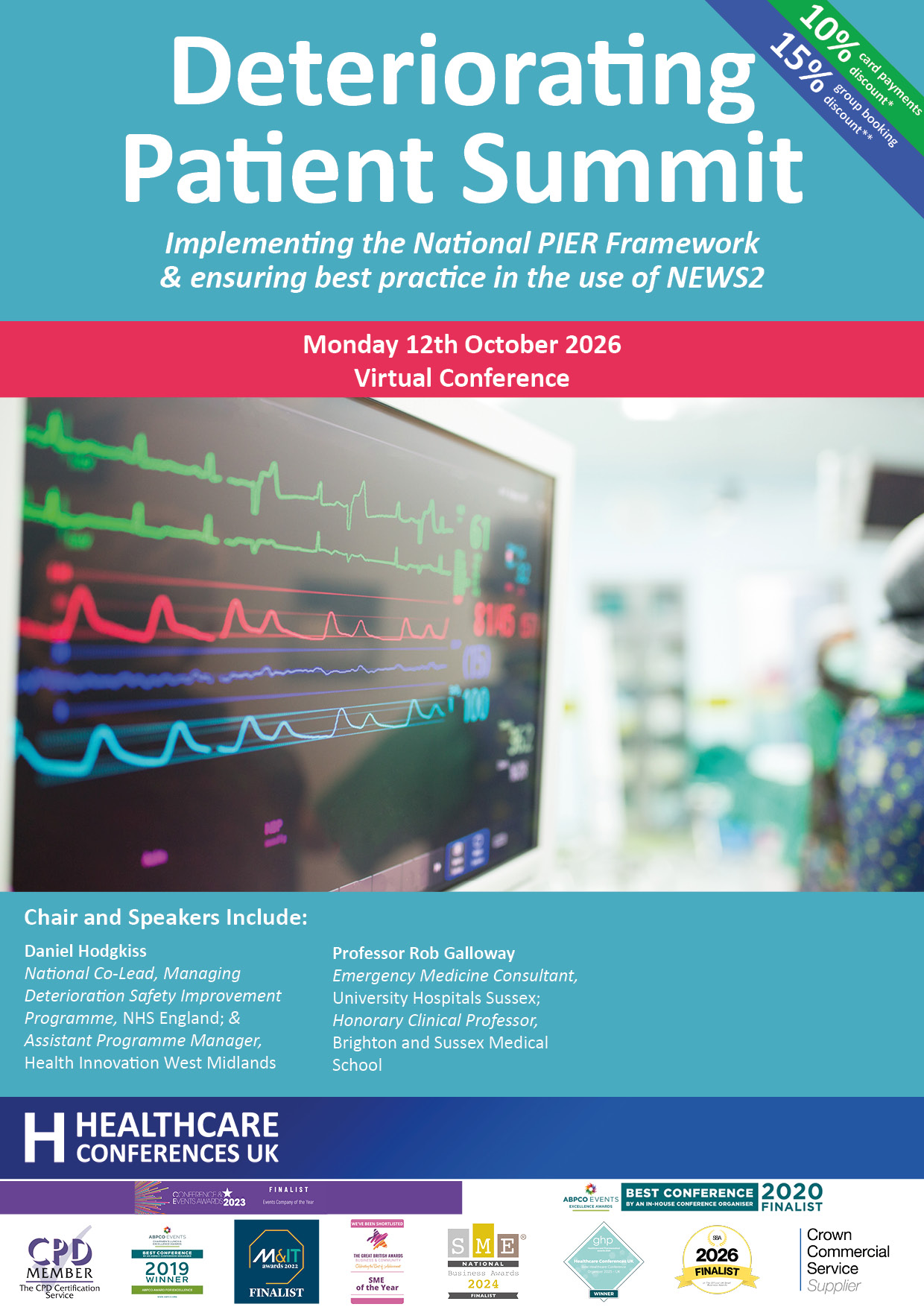
This conference focuses on recognising and responding to the deteriorating patient, and ensuring best practice in the use of NEWS2. The conference will include national developments, including recommendations on NEWS2, the national PIER approach to the effective management of acute physical deterioration in health and care, the November 2025 NICE Sepsis Guidance, and implementation of Martha’s Rule. The conference will also include reflections on implementing the recommendations from the Healthcare Safety Investigation Branch report Investigation into recognising and responding to critically unwell patients.
“The new PIER approach (Prevention, Identification, Escalation, Response) will enable the effective management of acute physical deterioration in health and care and will apply to all conditions, clinical settings and specialities. The new PIER approach views deterioration as a whole pathway which is supported by systems rather than only advocating a single strategy for identification... This work will improve how the NHS supports staff to manage the prevention of, and deterioration more effectively, as well as encourage greater involvement from patients, families, and carers.”
NHS England
The conference will include practical, case study based sessions on identifying patients at risk of deterioration, improving practice in patient observations, the role of human factors in responding to the deteriorating patient, understanding success factors in escalation, sepsis, involving patients and families in recognising deterioration, using clinical judgement, and improving the communication and use of NEWS2 in the community, including care homes, and at the interface of care.
The conference will update delegates on the practical implementation of Martha’s Rule and the 2026 Sepsis Modern Service Framework.
“Phase 1 of Martha’s Rule began in May 2024 and following positive results, is now being expanded to all remaining acute trusts in England, with full implementation across all acute inpatient settings expected during 2026/27.”
NHS England March 2026
“Today’s publication of the sepsis modern service framework marks significant progress for patient safety and takes an essential step towards saving more lives from sepsis and improving outcomes for survivors. ”
Dr Ron Daniels BEM, Founder and Chief Medical Officer at the UK Sepsis Trust 14th July 2026
“This new framework represents an important step forward in improving how we identify and respond to sepsis, using innovation and technology to support clinicians and help save lives.”
Minister for Patient Safety Preet Gill 14th July 2026
This conference will enable you to:
Network with colleagues who are working to improve the recognition and management of deteriorating patients
Learn from outstanding practice in improving care for deteriorating patients
Implement the recommendations from the HSSIB investigation into responding to critically unwell patients
Understand and implement the national PIER approach
Update your knowledge on the 2026 Sepsis Modern Service Framework
Improve implementation, monitoring and learning from Martha’s Rule in practice
Reflect on national developments and learning, including the latest evidence on effective implementation of NEWS2