
Follow the conference on social media #ReducingRestrictivePractice
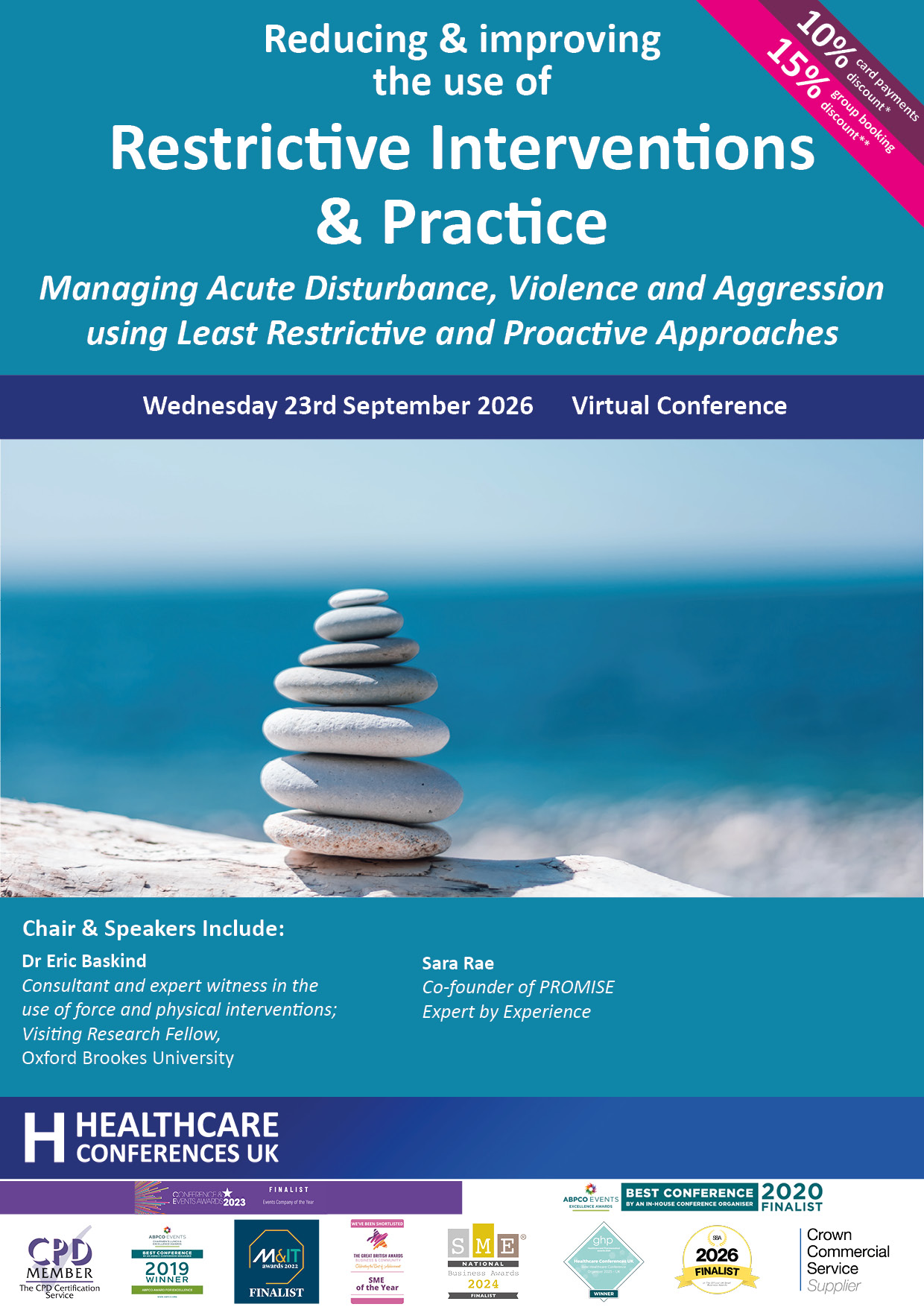
This virtual conference will focus on reducing restrictive interventions in line with national guidance to improve care and support. The conference will also delegates on practical steps to reduce restrictive practice, implement the CQC recommendations, and bring you up to date on legal developments including the Mental Health Units (Use of Force) Act.
“Everyone working in health and care has a role to play in reducing the use of restrictive practices.”
Care Quality Commission February 2026
“The NHS Long Term Plan has a strong focus on expanding and improving the quality of community care for people with mental health problems, including people with a learning disability and autistic people. The programme has five objectives including: Reducing restrictive practice through least coercive care • support models of care which reduce the use of force and restriction through enabling ‘easy in, easy out’ • research and identify ways to stop mechanical restraint, long-term segregation and other harmful forms of restrictive practice • ensure restrictive practice data captured has a focus on protected characteristics including racial inequalities and gender to help identify areas for more targeted intervention • ensure all forms of restrictive practices are understood, captured and acted upon linking with key mechanisms such as the Patient safety framework.”
NHS England 2025
The rate of restrictive interventions is now a metric under the NHS Oversight Framework which underpins the NHS League Tables;
“The rate of restrictive intervention use (per 1,000 bed days) has been on an upward trend in recent years, standing at 34 (per 1,000 bed days) in September 2025”
NHS England Performance Report December 2025
This conference will enable you to:
Network with colleagues who are working to reduce and improve the use of restrictive interventions in practice
Reflect on the lived experience of people who have experienced restraint and how you can work with them to improve practice
Understand how to engage people to reduce anxiety and improve coping strategies
Explore a wider view of restrictive practices including the use of devices, access to visitors
Update your knowledge national developments including the restrictive practices recommendations from the March 2025 CQC Monitoring the MHA Report
Understand what restraint is and what it is not
Improve your skills in the anticipation, de-escalation and prevention of violence and aggression
Develop a quality improvement approach to reducing violence in your service
Understand how to work in partnership with police, and the police role in restraint
Work with people with lived experience to better train and educate frontline staff
Understand new legal developments including the Mental Health Units (Use of Force) Act and Liberty Protection Safeguards
Develop effective post incident debriefing
Identify key strategies for reducing restraint and reducing harm from all kinds of restraint
Self-assess and reflect on your own practice
Supports CPD professional development and acts as revalidation evidence. This course provides 5 Hrs training for CPD subject to peer group approval for revalidation purposes