
A new report from the Royal College of Psychiatrists has warned that people living with both substance use and mental health disorders are being systematically failed by UK healthcare services.
The report, Co-occurring Substance Use and Mental Health Disorders (CoSUM), highlights how fragmented services and poor coordination are leaving some of the most vulnerable patients without effective care.
People with CoSUM conditions experience significantly worse outcomes than those with a single diagnosis, including poorer physical and mental health, reduced engagement with treatment and higher risks of suicide and premature death.
The report estimates that between one-third and one-half of people in mental health or substance use services are affected by both conditions, yet many cases go unrecognised.
Key problems identified
- Services for mental health and substance use often operate in isolation
- Patients are frequently excluded from care due to having “dual” needs
- Staff lack training to assess and manage co-occurring conditions
- Weak referral pathways mean people are “bounced” between services
- Systems are poorly equipped for safe withdrawal management and assessment
The report also highlights stark inequalities, with people from vulnerable or marginalised backgrounds particularly affected.
Gaps in care
Mental health services are expected to assess substance use, but many lack the tools or training to do so effectively. Meanwhile, substance use services often struggle to support even mild to moderate mental health conditions or to refer patients to specialist care.
This lack of integration can lead to patients being denied treatment altogether - sometimes because of their substance use and sometimes because of their mental illness.
What needs to change
The report calls for urgent reform, centred on better integration and workforce development. Recommendations include:
- Routine screening for both mental health and substance use in all services
- Improved staff training across both sectors
- Clear referral pathways between services
- Joint working models, including shared care and multidisciplinary teams
- Better discharge planning to reduce relapse and harm
It also urges policymakers to ensure services are properly funded and coordinated, warning that current commissioning structures contribute to disjointed care.
A “high priority” issue
The Royal College of Psychiatrists describes people with CoSUM disorders as one of the most complex and high-risk groups in healthcare, with unmet needs that require urgent attention.
Without significant changes, the report warns, many will continue to fall through the cracks of a system not designed to treat both conditions together.
Source: Royal College of Psychiatrists
To explore solutions in practice, attend our upcoming Improving the Management of Co‑occurring Mental Health and Substance Misuse CPD conference which is taking place virtually on Wednesday 30th September 2026.
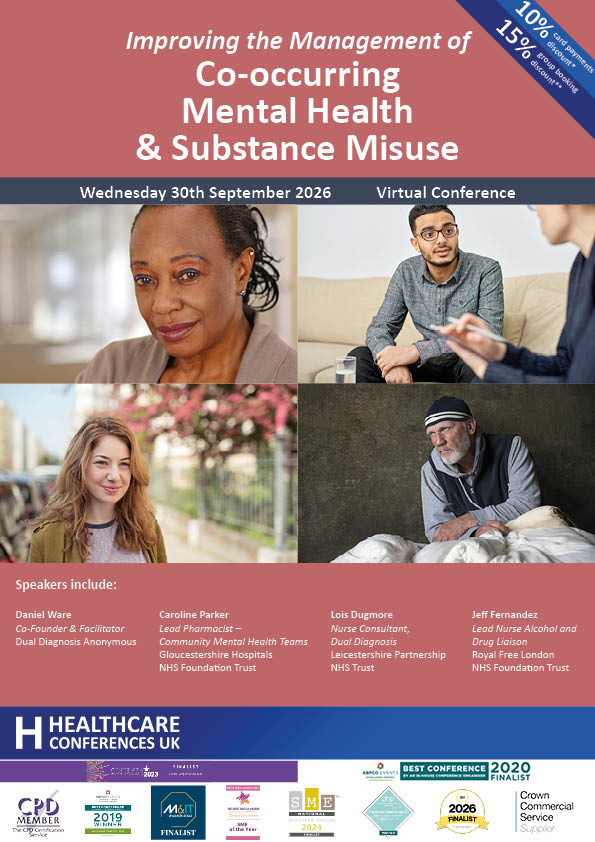
Find out more and book your place: www.healthcareconferencesuk.co.uk/virtual-online-courses/substance-misuse-mh