
The Health Services Safety Investigations Body (HSSIB) has published new findings exploring how patient safety incidents are investigated within mental health services under the Patient Safety Incident Response Framework (PSIRF), highlighting significant system-wide challenges and opportunities for improvement.
The investigation focuses on how NHS organisations are applying PSIRF principles in mental health settings, with particular emphasis on understanding risk, improving learning from incidents, and strengthening system-based approaches to safety.
A system-based approach is developing, but capability varies
The report identifies that the shift towards a system-based approach to investigations, moving away from blame, has been positively received by staff. However, applying investigation tools effectively requires experience, training and ongoing support, with capability still developing across organisations.
HSSIB highlights that investigation under PSIRF is a skilled activity, and variation in expertise can impact the quality and consistency of learning from incidents.
Barriers to safe care and learning remain
Across mental health investigations, HSSIB found that patient safety is influenced by a complex set of factors including workforce pressures, service capacity, and system integration.
Key challenges include:
- Difficulty identifying and mitigating risks consistently
- Gaps in communication and collaboration across services
- Variation in how learning is shared and embedded
- Ongoing cultural barriers, including fear of blame
Investigations aim to identify both barriers and enablers to safe care, supporting organisations to reduce harm and improve outcomes.
Patient and family involvement remains critical
A consistent theme across the investigation work is the importance of involving patients, families and carers in safety processes.
Evidence from HSSIB’s wider mental health investigations shows that where patients and families are not meaningfully involved in care or decision-making, this can contribute to both psychological and physical harm.
PSIRF places a strong emphasis on compassionate engagement and co-production, but embedding this in practice remains an area for improvement.
Opportunities to strengthen learning and improvement
The report highlights the need for:
- Greater consistency in investigation approaches
- Improved training and support for investigators
- Stronger system-level learning across organisations
- Better alignment between local investigations and national safety priorities
Ultimately, the findings reinforce that effective investigation is central to improving patient safety, but requires both cultural and structural change across the NHS.
What this means for practice
For organisations implementing PSIRF, the findings emphasise the importance of:
- Building investigation capability and expertise
- Embedding a just culture that supports learning
- Strengthening collaboration across health and care systems
- Ensuring patient and family voices are central to investigations
Read the HSSIB investigation report
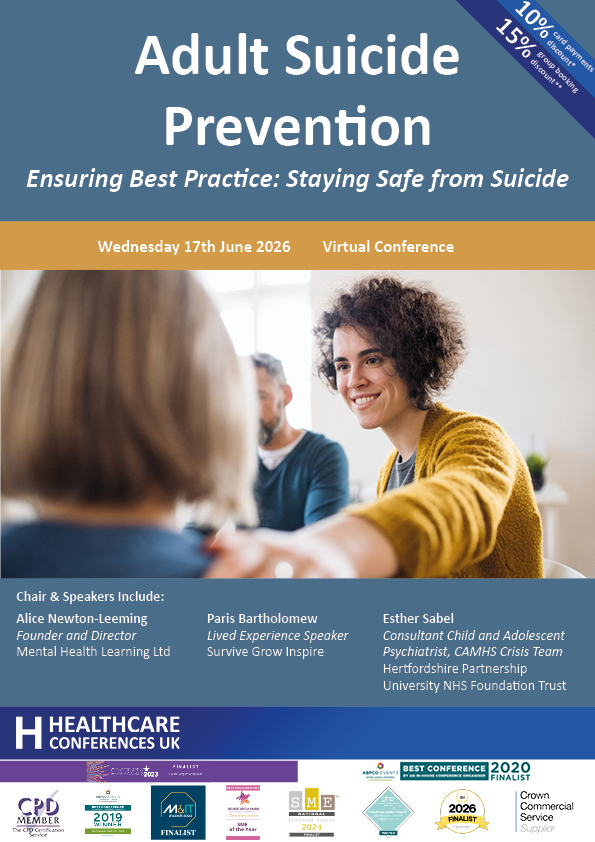 To explore how services can strengthen responses to self-harm and suicide risk, including improving safety planning and learning from incidents, attend our upcoming Improving Access and Support in Adult Suicide Prevention CPD certified conference, taking place virtually on Wednesdy 17th June 2026.