
In July the RCP released the findings from the 2025 Focus on physicians survey: job planning and supervision. The survey found; “The top three things most likely to be squeezed out during a busy week were professional development time, time to improve the quality of their service and time to train and supervise other doctors"
Commenting Professor Andrew Elder, President of the Royal College of Physicians of Edinburgh, said:
"It is deeply concerning that over half of physicians have said that their contracted job plans simply do not reflect the work they do. We know that this unsustainable position means that many clinicians face the risk of burnout and many who want to teach, supervise and mentor trainees to the standard we all wish to see are unable to do so; this lack of time for training and supervising others can cause a ‘moral distress’ for doctors in the same way that a lack of time to care for patients can do."
Read more here.
Following this the GMC released The State of Medical Education and Practice in the UK: Workplace Experiences 2025. The report found an improvement in doctor's wellbeing, with overall satisifaction being up, risk of burnout down, and workloads eased. However it also found that the health service remains under severe strain, compromising patient safety and impacting the time for training and education.
“Across the board, workload pressures are causing doctors to re-evaluate the responsibilities they take on, including training. This creates a significant vulnerability: without protected time to train, senior doctors will continue to decline supervisory and educational roles. The result will be a reduction in opportunities for doctors in training, putting the future pipeline of clinical expertise and leadership under threat.” General Medical Council August 2025
Read the full report.
Featured conference:
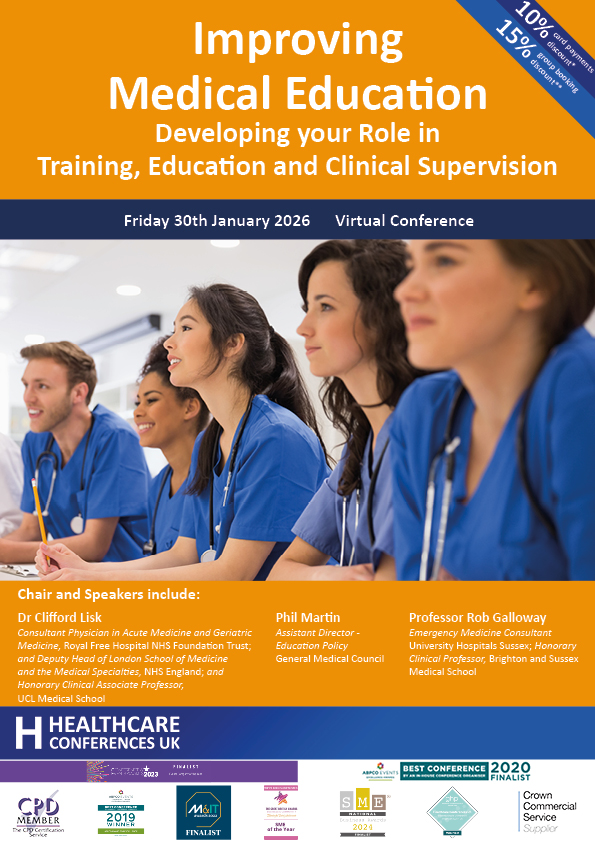 NEW: Improving Medical Education: Developing your role in Training, Education and Clinical Supervision
Fri, 30 Jan 2026 | Virtual, Online
This conference will provide practical support and skills development for doctors as medical educators in order to safeguard the effective training and support of the medical workforce.